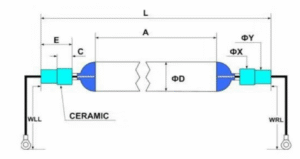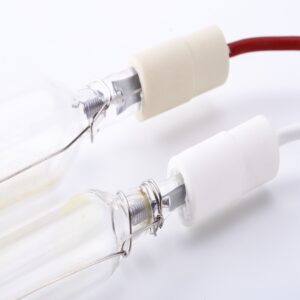
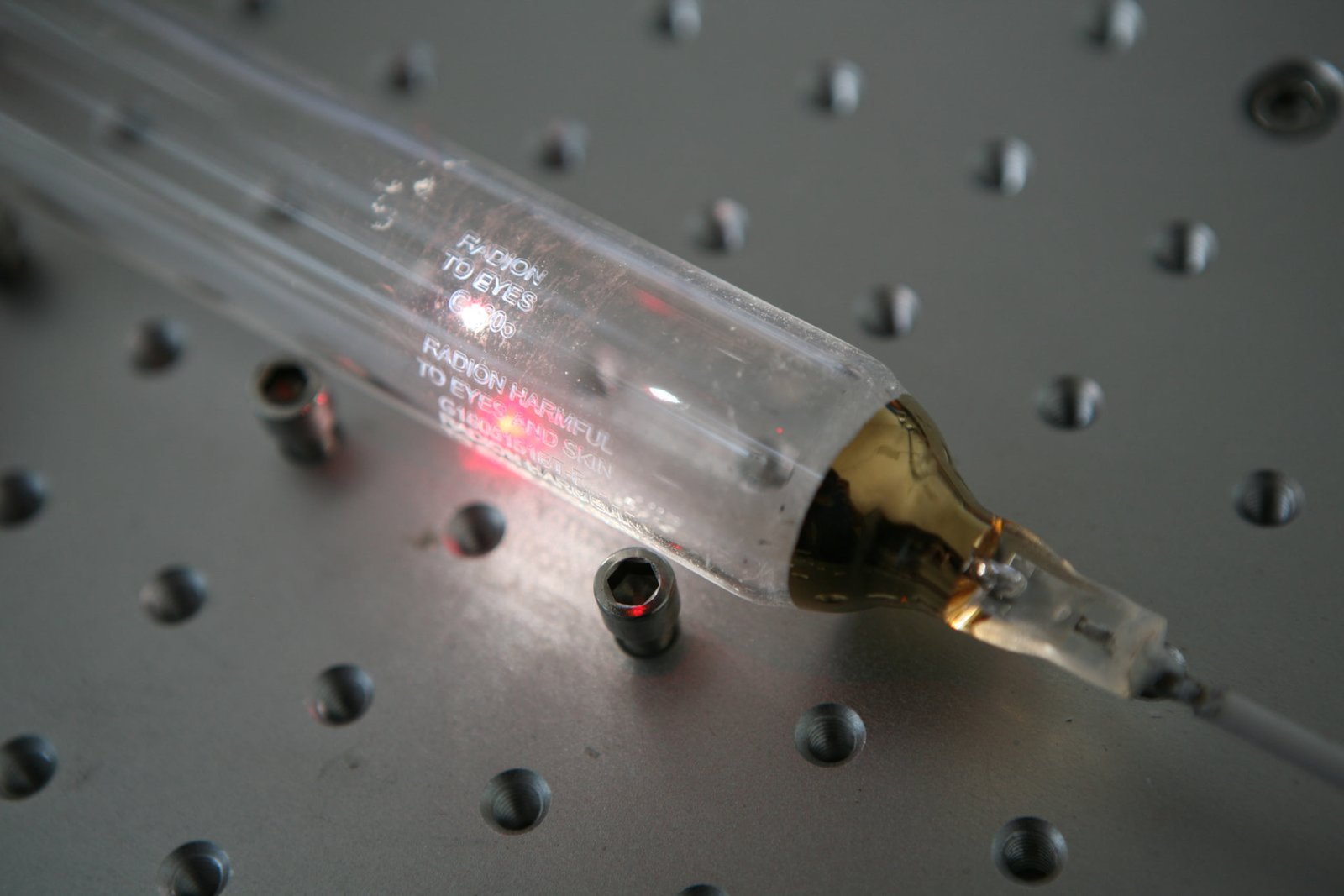
Understanding your actual high-pressure mercury lamp lifespan is essential if you want to prevent unexpected production shutdowns and curing failures. Many factory managers run their curing equipment blind until coatings exit tacky, inks smudge, and customer shipments face rejection. In this guide, I share how we evaluate industrial lamp longevity on the factory floor and in our test lab.
A standard industrial high-pressure mercury lamp lifespan typically delivers between 800 and 1,000 operational hours1 under properly balanced conditions. However, actual lifespan measures the working duration where UV-A and UV-V spectral output remains above 70% to 80% of original energy, rather than the total hours before the physical arc tube fails to ignite.
A common industry assumption treats 800 hours as an absolute expiration date. In reality, working life varies widely across different factories. Let us examine what physical factors drive this degradation and how procurement teams can accurately calculate replacement schedules.
What Defines an Industrial High-Pressure Mercury Lamp Lifespan?
Running a curing line without clear replacement criteria leads directly to expensive batch defects and unplanned press stoppages. Maintenance teams often assume that if an arc tube still glows bright white, the curing system operates normally. This assumption creates false security while curing performance drops steadily behind the scenes.
A high-pressure mercury lamp lifespan ends when the discharge tube can no longer deliver the minimum peak irradiance and total radiant energy dose required by your photoinitiators. While the bulb may physically strike and emit intense visible light for 1,500 hours, its usable ultraviolet curing spectrum degrades much earlier.

Useful UV Energy versus Human Visible Light
In our manufacturing workshop, I often review lamps returned by clients who insist the tube is "still lighting up fine" despite uncured inks. A high-pressure mercury lamp emits radiant energy across several zones:
- UV-C (200–280 nm): Drives surface cure and tack-free finish2.
- UV-B (280–315 nm): Supports intermediate cure depth.
- UV-A (315–400 nm): Provides through-cure and substrate adhesion.
- Visible Light & Infrared (400–800+ nm): Generates bright glare and heavy thermal heat.
Human eyes only detect the visible spectrum. As the lamp ages, the arc discharge continues to produce intense visible brightness and high infrared heat. However, the internal mercury vapor and quartz envelope lose their ability to transmit shortwave ultraviolet energy. The machine operator sees an intensely bright lamp, but the chemical crosslinking process fails because the actinic UV wavelengths have decayed.
Defining the Useful Life Criterion
For most industrial printing, PCB soldermask exposure, and clear-coat applications, we consider a lamp exhausted when its ultraviolet output drops below 70% to 75% of its original measured value.
| Operating Stage | Typical Output Range | Visual Appearance | Process Impact | Recommended Action |
|---|---|---|---|---|
| 0 – 100 Hours | 100% – 95% (Burn-in) | Clear quartz, crisp arc | Full line-speed curing | Baseline radiometer reading |
| 100 – 600 Hours | 95% – 85% | Clean body, minor electrode wear | Stable curing window | Routine monthly inspection |
| 600 – 800 Hours | 85% – 75% | Slight end darkening | May require slower conveyor | Prepare backup replacement lamp |
| 800+ Hours | Below 70% | Evident devitrification / blackening | Incomplete cure, soft coatings | Replace lamp immediately |
Treating 800 hours as an absolute rule is risky. A lamp operating on an improperly matched transformer might lose 40% of its curing energy in only 300 hours. Conversely, a clean lamp on a well-tuned power supply can run well beyond 900 hours before reaching that threshold.
Why Does High-Pressure Mercury Lamp Lifespan Degrade Before Burnout?
Purchasing teams often wonder why expensive quartz components lose their efficiency long before the electrical circuit breaks. When an operator must slow a production conveyor down by 30% just to achieve cure, production costs skyrocket. Identifying the root causes of spectral loss helps maintenance teams protect their equipment.
Ultraviolet output drops prematurely due to three physical mechanisms inside the bulb: quartz solarization, electrode tungsten sputtering, and surface devitrification. These degradation processes darken the quartz body, block essential UV wavelengths, and alter internal electrical resistance over hundreds of running hours.
Quartz Solarization and Structural Alteration
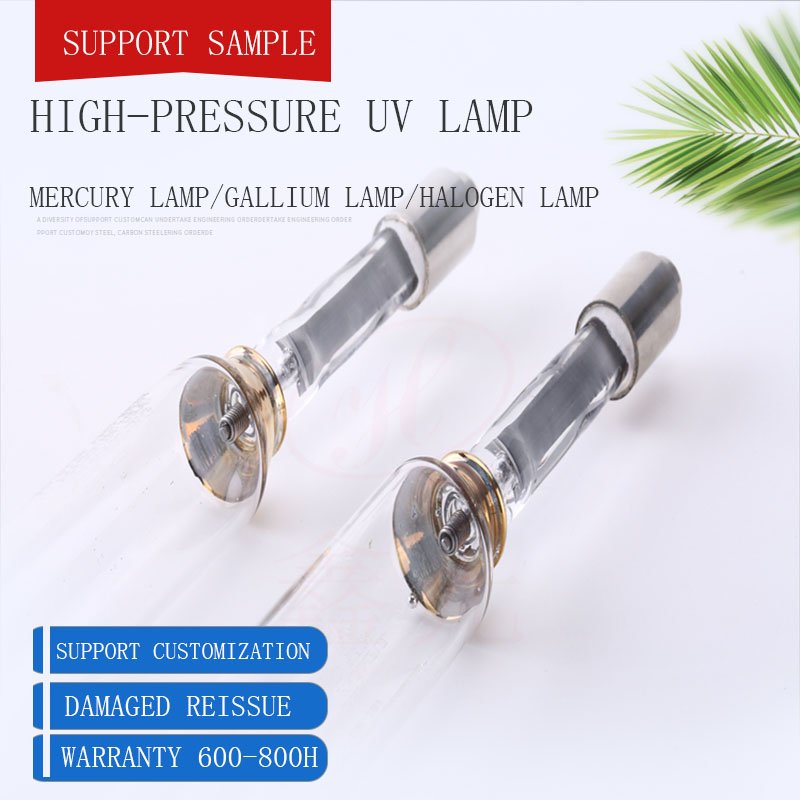
Industrial UV lamps use high-purity fused quartz glass to contain the high-pressure mercury arc. High-intensity 185 nm and 254 nm radiation bombards this quartz envelope constantly. Over hundreds of hours, this radiation alters the molecular matrix of the quartz, creating microscopic defects known as color centers3. This phenomenon, called solarization, turns the quartz slightly milky or amber, absorbing ultraviolet rays while allowing visible and infrared light to escape.
Electrode Sputtering and End Blackening
Inside the bulb, tungsten electrodes operate at temperatures above 2,000°C4. Each electrical ignition causes a tiny amount of tungsten to vaporize from the electrode tip.
Workshop Observation: When we cut open customer-returned lamps in our evaluation lab, we routinely observe heavy black deposits coating the inner quartz walls near the end fittings. That black film is evaporated tungsten. Once deposited, it absorbs UV radiation locally, raises quartz temperatures, and accelerates tube failure.
Devitrification from Contaminants
Industrial atmospheres contain airborne dust, vaporized ink mist, and oil droplets. If an operator touches the bare quartz tube with bare fingers, natural skin oils leave a residue.
- When the lamp reaches its standard 700°C to 900°C operating surface temperature, these organic residues burn into alkaline contaminants.
- The amorphous quartz structure rearranges into crystalline cristobalite5.
- This white, hazy crystallization weakens the tube wall, blocks UV transmission, and creates thermal stress zones that can cause physical tube rupture.
Which Operating Factors Shorten High-Pressure Mercury Lamp Lifespan?
Premature lamp failure stalls production schedules and triggers sudden supply runs that inflate express freight costs. Plant engineers often blame the lamp manufacturer first whenever an arc tube fails within 300 hours. In many field audits, however, the real culprit lies in external operational conditions.
Electrical component mismatch, unbalanced airflow cooling, frequent switching cycles, and dirty environments represent the primary operational factors that shorten tube life. Addressing these four installation variables prevents premature arc degradation and maintains consistent curing performance across shifts.
Thermal Imbalance: Overcooling versus Overheating
A mercury discharge lamp requires a precise wall temperature to sustain proper internal mercury vapor pressure. Imbalanced thermal management degrades lamp life rapidly:
- Overcooling: Excessive exhaust airflow cools the quartz wall below 600°C6. Mercury condenses back onto the tube interior, lowering internal vapor pressure. The lamp stays in a low-voltage, high-current operating mode that erodes electrodes.
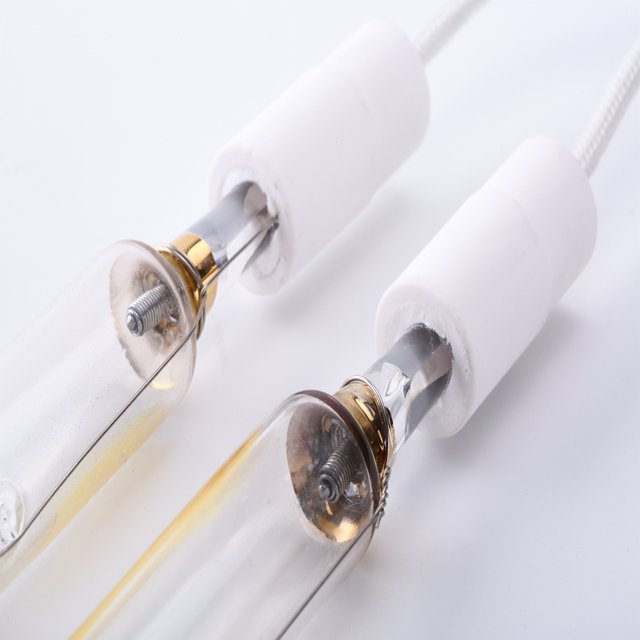
- Overheating: Inadequate exhaust air or clogged filters allow quartz temperatures to exceed 900°C7. Under internal pressure, the quartz envelope softens, bows downward, or develops localized bulging.
Power System Compatibility
A mercury curing lamp cannot connect directly to mains voltage. It relies on a ballast system—traditionally an iron-core step-up transformer paired with power capacitors8.
[Mains AC Input] ---> [Step-up UV Transformer] ---> [Capacitor Bank] ---> [High-Pressure Mercury Lamp]A common purchasing mistake is assuming any 5 kW lamp works with any 5 kW transformer. If the transformer secondary open-circuit voltage is too low, the lamp struggles to ignite, sputtering tungsten across the envelope. If the capacitor bank provides excessive running current, the electrodes overheat and burn back prematurely. Matching lamp impedance to the transformer and capacitor specifications is critical for lamp durability.
On/Off Cycling Frequency
A single ignition cycle inflicts more wear on tungsten electrodes than an hour of continuous operation. During a cold strike, the lamp operates in an unstable glow discharge mode before transitioning to an arc discharge9. This initial strike phase sputters tungsten heavily.
For continuous industrial production, we recommend consolidating print jobs. If the production line pauses for only 10 to 15 minutes, switching the system to half-power standby is often better for lamp longevity than striking the tube down and restarting cold.
How Can Operators Accurately Track High-Pressure Mercury Lamp Lifespan?
Relying on guess-and-check maintenance leads directly to line stoppages and product recalls. When operators wait until cured ink fails a tape-adhesion test10, entire batches of printed stock must be scrapped. Production managers need an objective inspection protocol to anticipate tube retirement.
Operators should track high-pressure mercury lamp life using calibrated UV radiometers, detailed run-time hour meters, and systematic visual inspections. This combined data-driven approach removes guesswork, allowing maintenance teams to schedule tube changeouts during planned machine downtime.
Implementing Radiometer Verification Routines
A basic hour meter tracks machine operation, but it cannot measure optical output. We advise our clients to establish a fixed radiometer inspection routine:
- Record the baseline: Measure peak irradiance (W/cm²) and energy density (J/cm²) with a calibrated radiometer when installing a new lamp after the initial 15-minute warm-up.
- Log weekly readings: Run the radiometer across the conveyor at fixed belt speeds and identical sensor distances.
- Graph the degradation curve: Plot the energy drop against elapsed hours.
- Define the replacement trigger: When irradiance declines by 25% to 30%, replace the lamp regardless of whether it still lights up.
Visual Diagnostics Checklist
During planned weekly maintenance, technicians should inspect cold lamps for physical signs of wear:
- Bulb Straightness: Look down the length of the quartz tube. Any noticeable bowing or sagging indicates poor cooling airflow or severe overheating.
- Quartz Clarity: A hazy, frosted white film indicates devitrification caused by airborne contaminants or handling without gloves.
- Darkened Ends: Small, light gray deposits near the ceramic bases are normal. Dense black rings extending more than an inch into the active arc area signal rapid electrode degradation or electrical mismatch.
- Ceramic and Terminal Integrity: Inspect lead wires and end caps for loose crimps, oxidation, or thermal discoloration. Loose electrical terminals create resistance, driving up localized temperatures.
Frequently Asked Questions
Can a high-pressure mercury lamp run past 1,000 hours?
Yes, many lamps stay illuminated past 1,000 hours. However, their emitted ultraviolet output usually drops below acceptable curing thresholds. Running expired lamps forces you to slow line speeds, risks batch adhesion failure, and consumes excessive electricity for very poor UV yield.
Does turning the UV lamp on and off frequently damage it?
Yes, frequent cycling degrades the lamp quickly. Striking the lamp causes cold-cathode sputtering, which strips material from the tungsten electrodes and coats the quartz walls. To maximize service life, use half-power standby modes during brief production interruptions rather than powering off completely.
Why did my new high-pressure mercury lamp turn black after 50 hours?
Early blackening usually points to electrical mismatch or improper handling. If the capacitor rating is too high, excessive current vaporizes the electrodes. Touching the quartz tube with bare hands also leaves skin oils that burn into the quartz, causing localized overheating and rapid darkening.
Does lamp wattage directly determine lamp lifespan?
No, lamp wattage indicates power consumption, not durability. A 2 kW lamp and a 10 kW lamp can share identical 800-hour ratings. Actual lifespan depends on linear power loading (Watts per inch or centimeter)11, thermal cooling balance, and system electrical compatibility.
Conclusion
Maximizing your high-pressure mercury lamp lifespan requires balancing optical physics, cooling airflow, and electrical compatibility. Treating 800 operational hours as an empirical guide—while tracking real-time UV energy with a radiometer—protects your production line from catastrophic adhesion failures and avoidable purchasing expenses.
At Beijing Huiyixin Electric Light Sources Technology Development Co., Ltd., we have manufactured industrial UV discharge lamps, matching transformers, and capacitors since 1998. Whether you need reliable replacement tubes for imported machinery or a fully matched power supply system, contact our engineering team to review your technical parameters and optimize your curing process.
"Mercury-vapor lamp", https://en.wikipedia.org/wiki/Mercury-vapor_lamp. Technical analyses of UV-curing systems indicate that standard medium- and high-pressure mercury discharge sources offer an effective operational service life of approximately 800 to 1,000 hours prior to excessive UV attenuation. Evidence role: statistic; source type: paper. Supports: Standard industrial mercury vapor curing lamps are commonly rated for 800 to 1,000 hours of effective operation before emission loss necessitates replacement.. Scope note: Lifespan benchmarks depend on lamp operating conditions, ballasting quality, and duty cycle duration. ↩
"Exploiting the Oxygen Inhibitory Effect on UV Curing in ... - PMC", https://pmc.ncbi.nlm.nih.gov/articles/PMC4351881/. Photopolymerization studies demonstrate that shortwave UV-C wavelengths exhibit high superficial absorption, producing rapid radical initiation that overcomes ambient oxygen inhibition at the film surface. Evidence role: mechanism; source type: paper. Supports: UV-C radiation provides high radical generation near the coating surface, which counteracts oxygen inhibition to establish surface cure.. ↩
"Laser-induced color centers in silica - ADS", https://ui.adsabs.harvard.edu/abs/2001SPIE.4347..155S/abstract. Investigations into fused silica optics show that high-energy UV radiation creates paramagnetic E' defect centers in the silica network, leading to solarization and reduced UV transmittance. Evidence role: mechanism; source type: paper. Supports: High-energy UV photons induce point defects, such as E' centers, within the amorphous silica lattice that cause optical absorption in the ultraviolet spectrum.. ↩
"Arc lamp", https://en.wikipedia.org/wiki/Arc_lamp. Diagnostic studies on high-intensity discharge lamps report steady-state tungsten electrode tip temperatures between 2,300 K and 2,800 K (above 2,000°C) during stable arc operation. Evidence role: statistic; source type: paper. Supports: Tungsten electrode tip temperatures in high-pressure discharge arcs reach above 2,000°C to sustain thermionic electron emission.. ↩
"Devitrification Rates of Fused Silica in the Presence of Trace ...", https://voljournals.utk.edu/cgi/viewcontent.cgi?article=3007&context=utk_chanhonoproj. Kinetic studies of vitreous silica demonstrate that trace alkali impurities substantially lower the activation barrier for devitrification, promoting the transformation of amorphous silica into cristobalite at high temperatures. Evidence role: mechanism; source type: paper. Supports: Alkali surface contaminants catalyze the thermal nucleation of vitreous silica into crystalline cristobalite at temperatures above 700°C.. ↩
"Mercury-vapor lamp - Wikipedia", https://en.wikipedia.org/wiki/Mercury-vapor_lamp. Discharge lamp engineering handbooks state that envelope wall temperatures must remain above approximately 600°C to ensure full vaporization of the mercury dose and sustain designed arc voltage. Evidence role: mechanism; source type: research. Supports: High-pressure mercury lamps require an envelope wall temperature above 550°C–600°C to prevent mercury condensation and maintain proper arc vapor pressure.. ↩
"Fused quartz", https://en.wikipedia.org/wiki/Fused_quartz. Reference properties for fused silica indicate that mechanical creep and thermal deformation accelerate when continuous operating temperatures exceed 900°C to 1,000°C under internal pressurization. Evidence role: mechanism; source type: encyclopedia. Supports: Continuous exposure of fused quartz to temperatures exceeding 900°C approaches the material's strain and annealing points, promoting plastic deformation under internal arc pressures.. ↩
"Constant wattage autotransformer ballast for high pressure ...", https://patents.google.com/patent/US3771068A/en. Electrical engineering handbooks describe constant-wattage autotransformer (CWA) ballasts, which incorporate a high-leakage reactance transformer and series capacitor bank to regulate discharge current. Evidence role: definition; source type: encyclopedia. Supports: Traditional magnetic ballasts for high-pressure discharge lamps use constant wattage autotransformer circuits pairing high-reactance transformers with power capacitors.. ↩
"Glow discharge", https://en.wikipedia.org/wiki/Glow_discharge. Investigations into high-intensity discharge lamp ignition confirm that the pre-arc glow phase subjects cold electrodes to heavy ion impact, resulting in cathode sputtering until thermionic arc attachment is achieved. Evidence role: mechanism; source type: paper. Supports: Prior to reaching thermionic emission temperatures, cold electrodes experience energetic ion bombardment in the glow discharge phase, causing significant tungsten sputtering.. ↩
"Paint adhesion testing", https://en.wikipedia.org/wiki/Paint_adhesion_testing. Standardized evaluation methods, such as ASTM D3359, define cross-hatch tape-adhesion testing procedures commonly employed to inspect the mechanical integrity and crosslinking of cured surface coatings. Evidence role: definition; source type: institution. Supports: ASTM D3359 provides standardized test methods for assessing coating adhesion using pressure-sensitive tape applied over cross-cut patterns.. Scope note: Tape adhesion evaluates physical interface bonding and mechanical integrity rather than absolute molecular conversion. ↩
"Estimation of the Ultraviolet-C Doses from Mercury Lamps and ...", https://pmc.ncbi.nlm.nih.gov/articles/PMC10857788/. Industrial UV equipment standards classify medium-pressure mercury discharge sources by linear power density, generally ranging from 100 to 600 W/in (approx. 40 to 240 W/cm) across the active arc length. Evidence role: definition; source type: research. Supports: UV discharge lamps are classified and matched to curing applications based on electrical power per unit arc length, typically measured in Watts per inch (W/in) or Watts per centimeter (W/cm).. ↩